



TL;DR
Investigators say a European sperm donor unknowingly carried a TP53 mutation linked to Li-Fraumeni syndrome, with his sperm used in at least 197 births across 14 countries, exposing gaps in global limits and genetic screening for donor sperm.
Why This Matters
This case highlights how modern fertility treatment, which often crosses borders, can expose families to rare but serious genetic risks that existing rules do not fully cover. A single donor, whose sperm was distributed widely over 17 years, is now linked to almost 200 children and an inherited cancer syndrome that can carry up to a 90% lifetime cancer risk.
Because there is no international law governing how many families can use one donor, national limits can be undermined when large commercial sperm banks sell samples across multiple countries. That creates a patchwork of protections for patients and for the children who may inherit genetic conditions.
The story also underscores the limits of current donor screening. The TP53 mutation involved here arose in only some of the donor’s cells, making it difficult to detect in routine tests. For families who used donor sperm, this incident raises pressing questions about what can realistically be screened, how clinics communicate risk, and how authorities respond when problems emerge.
Key Facts & Quotes
According to a cross-European investigation by 14 public-service broadcasters working through the European Broadcasting Union’s Investigative Journalism Network, an anonymous sperm donor began donating as a student in 2005. His sperm was used in fertility treatment for around 17 years.
Later genetic analysis showed that a proportion of his sperm carried a mutation in the TP53 gene, which normally helps prevent cells from becoming cancerous. Children conceived from affected sperm inherit the faulty gene in every cell, a condition known as Li-Fraumeni syndrome. This syndrome is associated with a very high lifetime risk of cancer, including childhood cancers, bone cancers, brain tumours and breast cancer.
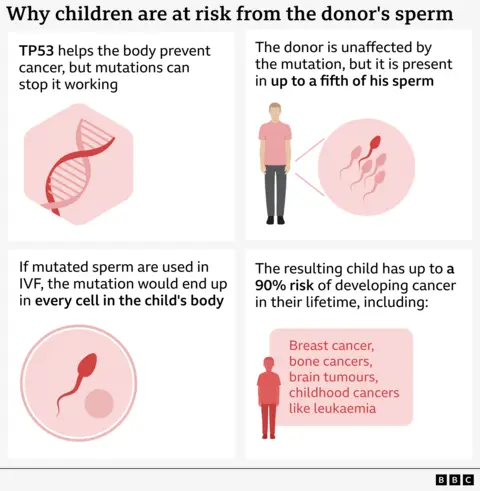
The investigation reports that at least 197 children have been born using this donor’s sperm through 67 fertility clinics in 14 countries. Not all of those children are known to carry the mutation, but some have already developed cancer, and some have died. The total number of affected children is still not fully known.
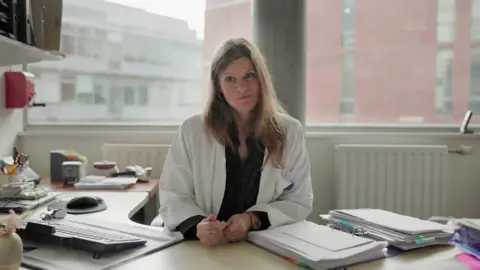
Geneticist Prof Clare Turnbull, from the Institute of Cancer Research in London, described Li-Fraumeni syndrome as “a dreadful diagnosis” and “clearly devastating” for families, adding that it carries a lifelong burden of living with cancer risk. Children with the syndrome typically require regular MRI scans and ultrasounds to detect tumours early, and some women choose preventive breast surgery to reduce their cancer risk.
The European Sperm Bank in Denmark, which distributed the donor’s sperm, said in a statement that the donor and his relatives are not ill and that this type of mutation is “not detected preventatively by genetic screening”. The bank said it “immediately blocked” the donor once the issue came to light and expressed “deepest sympathy” for affected families. It also acknowledged that national limits on how many families may use a single donor had “unfortunately” been exceeded in some countries and said it is in dialogue with authorities in Denmark and Belgium.
In Belgium, where one donor is supposed to be used by a maximum of six families, the report says the donor’s sperm was used by 38 women, resulting in 53 children. Overall, there is currently no global law setting a maximum number of uses for a sperm donor; instead, each country sets its own rules.
The investigation found that the donor’s sperm was not supplied directly to clinics in the United Kingdom. However, Danish authorities have informed the UK’s Human Fertilisation and Embryology Authority (HFEA) that a “very small number” of British women travelled to Denmark for treatment with this donor’s sperm. Peter Thompson, chief executive of the HFEA, said those women have been contacted by the Danish clinic where they were treated.
Sperm from donor with cancer-causing gene was used to conceive almost 200 children
Read more: https://t.co/UyMpZRudlz pic.twitter.com/sTsZkN7XQ8— DailyMirror (@Dailymirror_SL) December 10, 2025
The donor’s identifying number has not been released by investigators, who note that he donated in good faith and passed standard screening checks. Experts point out that the mutation likely arose in a subset of his cells before birth, meaning only an estimated 20% of his sperm carry the faulty TP53 gene.
Prof Allan Pacey, a fertility specialist and former head of the Sheffield Sperm Bank, said this case is “awful” for everyone involved but warned that it is impossible to remove all risk from donor screening. “You can’t screen for everything,” he said, explaining that only around 1-2% of men who apply to be donors are currently accepted. If screening became much stricter, he argued, there might be too few donors to meet demand.
What It Means for You
For anyone considering fertility treatment, this latest update is a reminder that while donor screening is extensive, it cannot guarantee that all rare or emerging genetic issues will be caught. Most donors are healthy and most donor-conceived children do not face this kind of extreme risk, but families may wish to ask clinics how donors are screened, how many families each donor can help, and what happens if a genetic problem is discovered later.
The case is likely to fuel debate about setting stronger international standards on donor use and information-sharing between clinics and regulators. It may also encourage more use of genetic counselling, particularly when rare conditions are suspected in donor-conceived children.
Authorities in several countries are now reviewing how many families can use a single donor and how quickly clinics must act when concerns are raised. For patients, the practical step remains to stay informed, ask detailed questions of fertility providers, and seek medical advice promptly if they have concerns about their own or their child’s health.
Question for readers: How do you think fertility regulators should balance the need for donor sperm with stronger safeguards on genetic risk and donor numbers?
Sources
Cross-European investigation by 14 public-service broadcasters via the European Broadcasting Union’s Investigative Journalism Network, published December 10, 2025; statements from the European Sperm Bank, the UK Human Fertilisation and Embryology Authority, and quoted experts including Prof Clare Turnbull and Prof Allan Pacey, as cited in that investigation.