


TL;DR
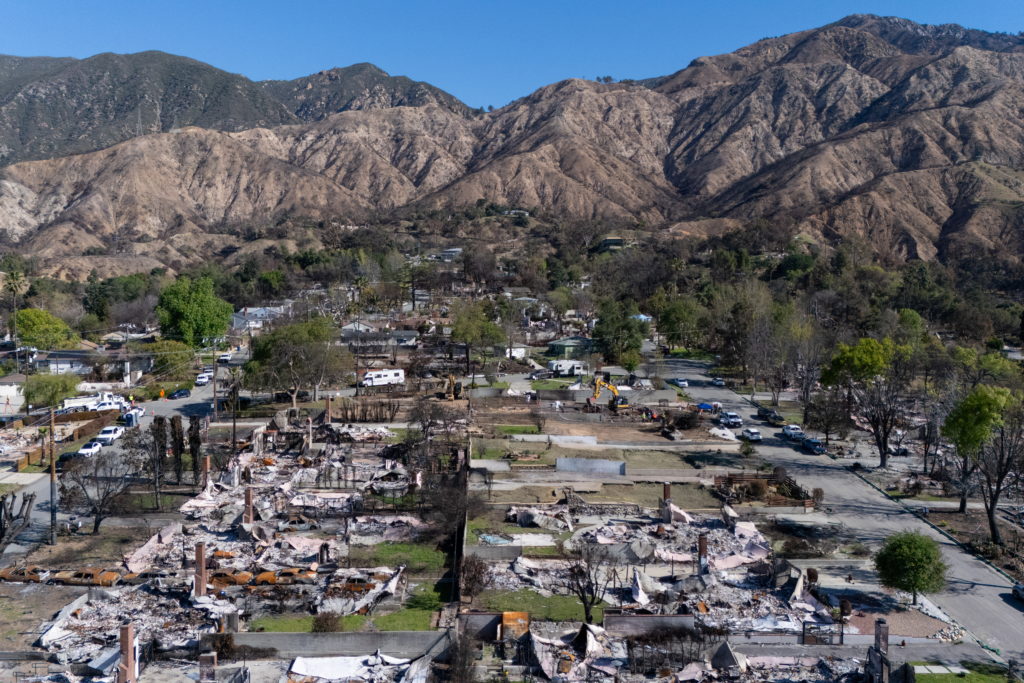
One year after twin wildfires – the Palisades and Eaton fires – tore through opposite ends of Los Angeles County, 31 people are dead, more than 16,000 structures are gone, only 10 homes have been fully rebuilt and tens of billions in federal aid are still awaiting approval.
Why This Matters
The Palisades and Eaton fires, which ignited within hours of each other on Jan. 6, 2024, remain one of Los Angeles County’s most destructive wildfire disasters on record. Together they burned 59 square miles, an area roughly the size of the city of San Francisco, and exposed how fast wind-driven flames can overwhelm even well-resourced urban and suburban communities.
For residents across the American West, the numbers offer a stark picture of what intense fire seasons now look like: rapid ignition in dry conditions, high death tolls and long, costly recoveries. According to National Weather Service alerts issued that day, forecasters warned of a potentially life-threatening wind event as Santa Ana gusts approached 90 miles per hour and months of little or no rain left grasses and brush tinder dry.
The financial stakes are also large. California’s governor requested $33.9 billion in federal disaster aid, which the Trump administration and Congress had not yet approved a year later. A separate study by the Milken Institute found at least $860 million to $970 million in charitable commitments, underscoring how much communities now rely on private giving to help families rebuild.
Key Facts & Quotes
On the morning of Jan. 6, 2024, reports of a small blaze came in around 10:30 a.m. from a ridge in Pacific Palisades, an upscale coastal neighborhood on Los Angeles’ western edge. Within about four hours, pushed by powerful Santa Ana winds, that fire had exploded in size. Evacuation orders were issued for the Palisades, and nearby communities were told to be ready to leave as roads jammed with residents trying to escape.
As resources were concentrated on the Palisades Fire, a second blaze ignited around 6:17 p.m. near Altadena, at the opposite end of Los Angeles County. This Eaton Fire doubled in size by about 8 p.m., while high winds forced officials to ground all firefighting aircraft. Together, the two infernos burned 59 square miles (155 square kilometers).
In total, 31 people died – 19 in the Eaton Fire and 12 in the Palisades Fire, according to local authorities. The Palisades Fire burned for 31 days and ultimately covered 37 square miles (95 square kilometers). Investigators later determined it had grown out of an earlier fire that started on Jan. 1. The Eaton Fire burned 22 square miles (57 square kilometers) before being extinguished after 25 days.
Los Angeles County reported that 16,255 structures were destroyed across both blazes: 9,418 homes and other buildings in Altadena, and 6,837 buildings, mostly homes, in Pacific Palisades and surrounding areas including Malibu. Yet, according to city and county data cited in Associated Press reporting, only 10 houses had been fully rebuilt one year later – most in Altadena, with one in Pasadena and two in Pacific Palisades. None were finished in Malibu, though hundreds more homes were under construction.
Governor Gavin Newsom requested $33.9 billion in federal disaster aid for the region, but as of the one-year mark, the request remained pending before the Trump administration and Congress. In the meantime, a Milken Institute study estimated total charitable commitments for LA fire relief at between $860 million and $970 million, with about $265 million raised through individual GoFundMe donations. The National Weather Service said conditions on the day of ignition could create a “life-threatening wind event,” a warning that proved accurate as flames raced through neighborhoods.
What It Means for You
For people living in fire-prone areas across California and the broader West, the Palisades and Eaton fires show how quickly a wind-driven blaze can turn from a small ridge fire into a countywide emergency. Even well-insured homeowners may face years of disruption when rebuilding moves slowly, permits are backlogged and construction costs surge after a major disaster.
Marking one year since the devastating Palisades and Eaton wildfires, CBS LA is bringing back its Coffee With CBS initiative to check in with residents and hear firsthand about their recovery journeys. Launched in the wake of the fires, the initiative was designed to connect… pic.twitter.com/48nIdCXYa2
— anreads (@newyorktaxcon) January 5, 2026
The disaster also highlights how recovery depends on a mix of federal aid, state support and private donations – and how delays in any of those streams can leave survivors in limbo. For older adults, those on fixed incomes and families with children, long-term displacement can strain finances, health and schooling. Watching how quickly promised federal aid is approved, how many more homes are rebuilt and what changes are made to evacuation and building rules will offer clues to how prepared Southern California is for the next major wildfire season.
Sources: Associated Press reporting from Los Angeles for PBS NewsHour (Jan. 6, 2026); National Weather Service Southern California wind and fire advisories (Jan. 6, 2024); Los Angeles city and county rebuilding data cited in public records through late 2025; Milken Institute wildfire relief funding study (2024).
What changes, if any, do you think communities should prioritize to better prepare homes and neighborhoods for future large wildfires?