


Why This Matters
As construction of new border barriers accelerates along the nearly 2,000-mile U.S.-Mexico border, Indigenous nations say centuries-old sacred places are being blasted, bulldozed, or cut off from traditional use. The dispute highlights a sharp clash between border security goals and longstanding religious and cultural rights.
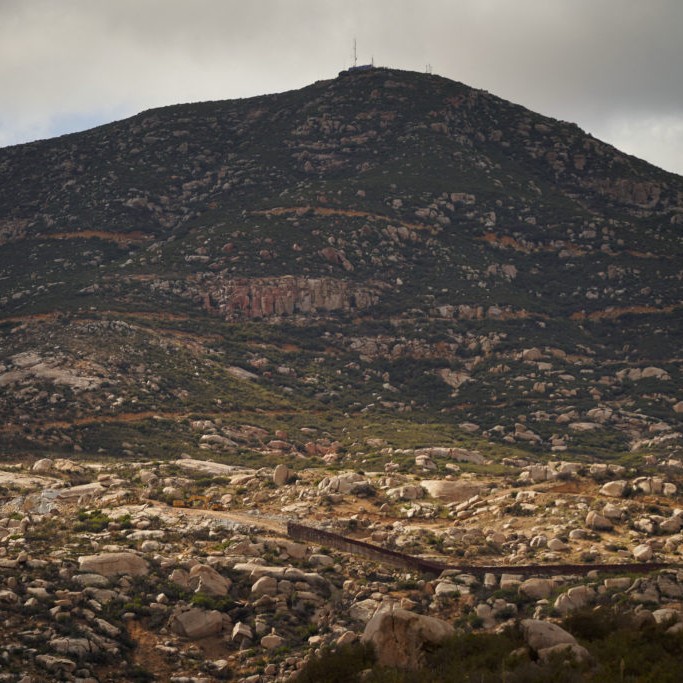
Many of the sites at issue predate the United States and are central to creation stories, ceremonies, and community identity for tribes whose homelands were split by the international boundary more than 170 years ago. Some locations, such as Kuuchamaa (also known as Tecate Peak), are listed on the National Register of Historic Places and are supposed to receive special protection.
Under federal law, desecrating a sacred Native American site on federal or tribal land is a felony. Tribal leaders argue that broad waivers of environmental and cultural protections by the Department of Homeland Security are undermining those safeguards and could set lasting precedents for how U.S. agencies treat Indigenous heritage in future infrastructure projects.
Key Facts and Quotes
In Tecate, on the California-Baja California border, Kumeyaay Nation leader Norma Meza Calles leads spiritual walks to Kuuchamaa Mountain, which her people see as a living healer. During one recent gathering, the sound of federal contractors blasting rock for new wall segments cut through the ceremony. “This is sacred to us like a church for you all,” she said, describing the mountain as a source of strength in difficult times.
Explosions on the U.S. side have sent rocks tumbling down the Mexican slope of Kuuchamaa. Kumeyaay leader Emily Burgueno said the impacts are deeply felt, noting that the same word in their language means both “body” and “land.” “We feel that in our DNA,” she said, adding that “no one ever consented or supported the use of dynamite on the mountain.” Some Kumeyaay leaders have met with Department of Homeland Security officials and are exploring legal options.
In Arizona, tribal officials say another irreplaceable site has already been partly destroyed. Contractors working for the Department of Homeland Security cut through a roughly 1,000-year-old fish-shaped geoglyph known as Las Playas Intaglio, etched into desert lava fields in what is now the Cabeza Prieta National Wildlife Refuge. Tohono O’odham Nation Chairman Verlon Jose called the damage “a devastating and entirely avoidable loss,” saying the ancient figure was vital to O’odham history and also part of U.S. heritage. U.S. Customs and Border Protection said a contractor “inadvertently disturbed” the site and pledged to protect what remains, while CBP’s commissioner consults tribal leaders on next steps.
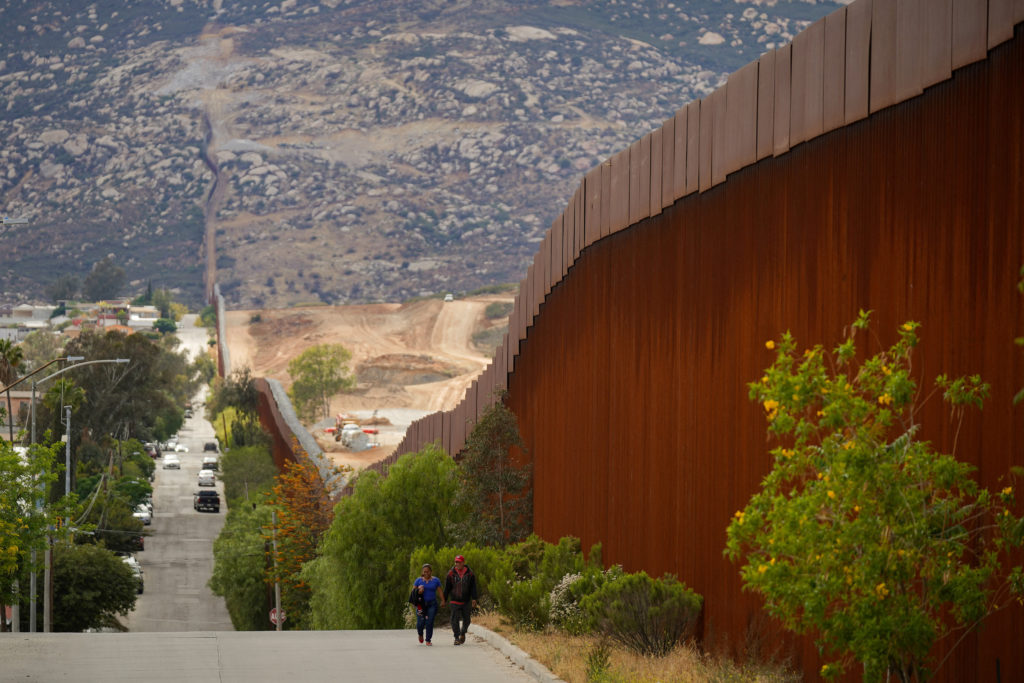
The current building push is backed by more than $46 billion in federal funding, with the Trump administration seeking wall coverage on at least 1,400 miles of the border. CBP says contracts have been awarded or construction is underway on more than 600 miles of new barriers, with additional double walls planned along hundreds of miles. Tribal and local religious leaders say the fallout reaches far beyond Arizona and California, citing blasts on Mount Cristo Rey, a Catholic pilgrimage site in New Mexico, and proposed land seizures near canyon pictographs and petroglyphs east of Big Bend National Park in Texas.
Members of the Inter-Tribal Association of Arizona, representing 21 tribes, recently traveled to Washington to oppose a 20-foot secondary wall and a planned 30-foot primary bollard wall on or near Tohono O’odham lands. They met with Homeland Security Secretary Markwayne Mullin, a Cherokee Nation citizen, who, according to the Tohono O’odham Nation, listened but signaled he intends to keep wall construction moving quickly. CBP, for its part, says it recognizes the importance of cultural and natural resources, has adjusted some plans in Texas after local backlash, and is leaving gates open in key wildlife corridors. The agency notes that it will rely solely on detection technology for about 535 miles of rugged border terrain, an approach many tribes say they would prefer to more wall segments.
What It Means for You
The outcome of these disputes could influence how far federal agencies can go in waiving environmental and cultural laws for national security projects. Court challenges from tribes, churches, and landowners may test the strength of existing protections for sacred sites, religious practice, and historic preservation when they stand in the path of large-scale infrastructure.
For people who live far from the border, the latest developments offer a window into broader questions: which tools the United States chooses to secure its borders, how much weight is given to Indigenous and local voices, and whether technology-based monitoring can replace some physical barriers. The answers will shape not only the landscape of the Southwest, but also how the country defines respect for culture, faith, and wildlife in security decisions.
How do you think the United States should weigh border security needs against protecting sacred, historic, and environmental sites along the border?
Sources
Associated Press reporting by Julie Watson, carried by PBS NewsHour, published May 17 2026; public statements and materials from U.S. Customs and Border Protection, the Tohono O’odham Nation, the Diocese of Las Cruces, and the Kumeyaay Diegueno Land Conservancy, April-May 2026.