



TL;DR
Bloomberg published what it says is a call transcript in which Trump envoy Steve Witkoff advised a senior aide to Vladimir Putin on how Russia should pitch President Donald Trump a Ukraine peace plan, drawing fresh scrutiny of Trump’s approach to the war.
Why This Matters
The reported call adds a new layer to already sensitive diplomacy around Russia’s full-scale invasion of Ukraine, now in its third year. The United States has been one of Kyiv’s main backers, while Russia seeks to ease Western pressure and reshape any peace talks on its own terms.
Because the conversation allegedly involved direct guidance from President Donald Trump’s envoy to a top Kremlin adviser, it raises questions about how closely U.S. and Russian priorities may be aligning or diverging behind the scenes. It also comes as Washington debates long-term military and financial support for Ukraine, and as public attention has shifted in part to the Middle East following a Gaza ceasefire deal.
The episode could influence trust in any future peace initiative, both in Kyiv and among U.S. lawmakers from both parties. It also highlights how private conversations between political insiders can shape public conflicts, even when official policy statements remain unchanged. How this story develops may affect not only Ukraine’s battlefield position but also broader U.S.-Russia relations and America’s standing with European allies.
Key Facts & Quotes
According to a transcript of an October 14 call published by Bloomberg News and reported by PBS NewsHour, Trump envoy Steve Witkoff spoke with Yuri Ushakov, Russian President Vladimir Putin’s foreign policy adviser.
Breaking: Transcript Shows US Envoy Coaching Kremlin on 28-Point Framework
Bloomberg released the phone transcripts of a call where US Envoy Steve Witkoff advised a senior aide to Vladimir Putin on how to pitch a Ukraine “peace plan” directly to the President. The White House… pic.twitter.com/FRF4bgSeCq
— OSINT Intuit™ (@UKikaski) November 26, 2025
In the reported call, Witkoff advised that Putin should telephone President Trump to congratulate him on the Gaza ceasefire agreement, say Russia had supported it, and stress that he respects Trump as a “man of peace.” From that, Witkoff said, “it’s going to be a really good call,” according to the transcript.
Bloomberg said it reviewed a recording of the call but did not disclose how it obtained it. The Associated Press noted it has not independently verified the transcript.
Ushakov, asked by Russian state media about the report, did not dispute the authenticity of the recordings but said Moscow had not leaked them. He suggested the leak was likely intended to harm U.S.-Russia ties, saying, “It’s unlikely this is being done to improve relations.” He added that he speaks with Witkoff “quite often” but insisted, “The essence of these conversations is that they are confidential. I won’t comment. No one should comment.”
The call reportedly came a day after Trump made a high-profile trip to Israel and Egypt to mark the Gaza ceasefire. Witkoff floated a “20-point plan to peace” and suggested Putin could tell Trump that “Steve and Yuri discussed a very similar 20-point plan to peace” and that Moscow was “open to those sorts of things.”
Witkoff also proposed arranging a Trump-Putin call before Ukrainian President Volodymyr Zelenskyy’s scheduled White House visit and urged that Putin begin by congratulating Trump on the Gaza deal. Ushakov agreed, saying Putin would congratulate Trump and call him “a real peace man,” according to the transcript.
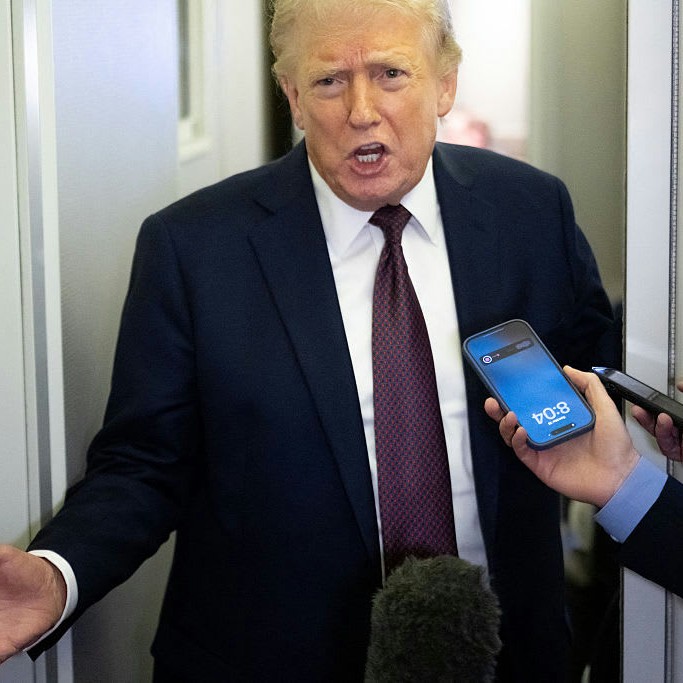
The White House did not dispute the apparent accuracy of the transcript, according to the AP report. Trump, speaking to reporters aboard Air Force One, described Witkoff’s reported approach as standard dealmaking, saying of his envoy, “He’s got to sell this to Ukraine. He’s got to sell Ukraine to Russia. That’s what a dealmaker does.”
Trump also said a proposal to end Russia’s war in Ukraine has been “fine-tuned” and that he is sending Witkoff to meet with Putin.
Not all Republicans were supportive. U.S. Representative Don Bacon of Nebraska, a Republican who has criticized Trump’s Ukraine stance, wrote on social media that the transcript showed Witkoff favors Russia. “He cannot be trusted to lead these negotiations. Would a Russian paid agent do less than he? He should be fired,” Bacon said.
What It Means for You
For many Americans, the latest update on Ukraine may feel distant, but it has real implications at home. U.S. economic aid and military support for Kyiv involve taxpayer dollars and broader questions about America’s role in global conflicts. Any shift in how Washington engages with Moscow could affect energy markets, inflation pressures, and security commitments in Europe.
The report also offers a window into how foreign policy can be shaped by personal relationships and private calls, not just formal speeches and votes. Voters who care about transparency, checks and balances, and the boundaries between public office and private dealmaking may watch closely how Congress and U.S. allies respond.
In the months ahead, key signals to watch include: whether a concrete Ukraine peace proposal is made public, how Kyiv reacts to any plan involving direct Trump-Putin talks, and whether lawmakers in both parties seek more oversight of back-channel diplomacy.
Sources: Bloomberg News transcript report on Steve Witkoff-Yuri Ushakov call (published Tuesday, date as reported); PBS NewsHour / Associated Press coverage of the call and official reactions (published Nov. 26, 2025).
How much transparency do you think the public should expect when U.S. envoys discuss peace plans with rival powers like Russia?