



TL;DR
Colombian President Gustavo Petro is forcefully rejecting President Donald Trump’s unproven drug-trafficking accusations and implied threats following a recent U.S. military operation in neighboring Venezuela, raising concerns about the future of one of Washington’s closest partnerships in Latin America.
Why This Matters
Colombia is a major non-NATO ally of the United States, a formal status granted by Washington that underpins decades of cooperation on security, counter-narcotics and migration. When a sitting U.S. president publicly questions the integrity of Colombia’s head of state and hints that he could be “next” after a military action in Venezuela, it puts that strategic relationship under strain.
The tensions come as Colombia hosts millions of Venezuelans who fled economic collapse and political repression under President Nicolas Maduro. According to United Nations agencies, Colombia has received more Venezuelan migrants and refugees than any other country in the region. Any disruption in ties with Washington could affect humanitarian funding, anti-drug operations and broader regional stability.
Petro, a former guerrilla fighter who became Colombia’s first leftist president in 2022, has tried to balance criticism of Maduro with a push for negotiated solutions in Venezuela. A sharp escalation with the United States could limit Colombia’s ability to act as a regional mediator and may complicate U.S. policy toward both Bogota and Caracas.
Key Facts & Quotes
In recent days, President Trump has repeatedly alleged, without presenting evidence, that Gustavo Petro has ties to the illegal drug trade. He has also suggested that Petro “could be next” following a U.S. military operation in Venezuela, according to a televised interview with a correspondent reporting from Bogota.
Colombian leaders have pushed back strongly. Officials note that Petro has never been indicted for drug trafficking and that there is “absolutely no proof” supporting Trump’s claims. Colombia remains one of Washington’s closest security partners, receiving billions of dollars in U.S. assistance over two decades to fight drug cartels and armed groups, according to U.S. government data.
Petro’s background is central to how Colombians interpret the exchange. He was once a member of the M-19 guerrilla movement, a left-wing group that demobilized in the 1990s under a peace deal. He later entered politics, serving as a senator and mayor of Bogota before winning the presidency.
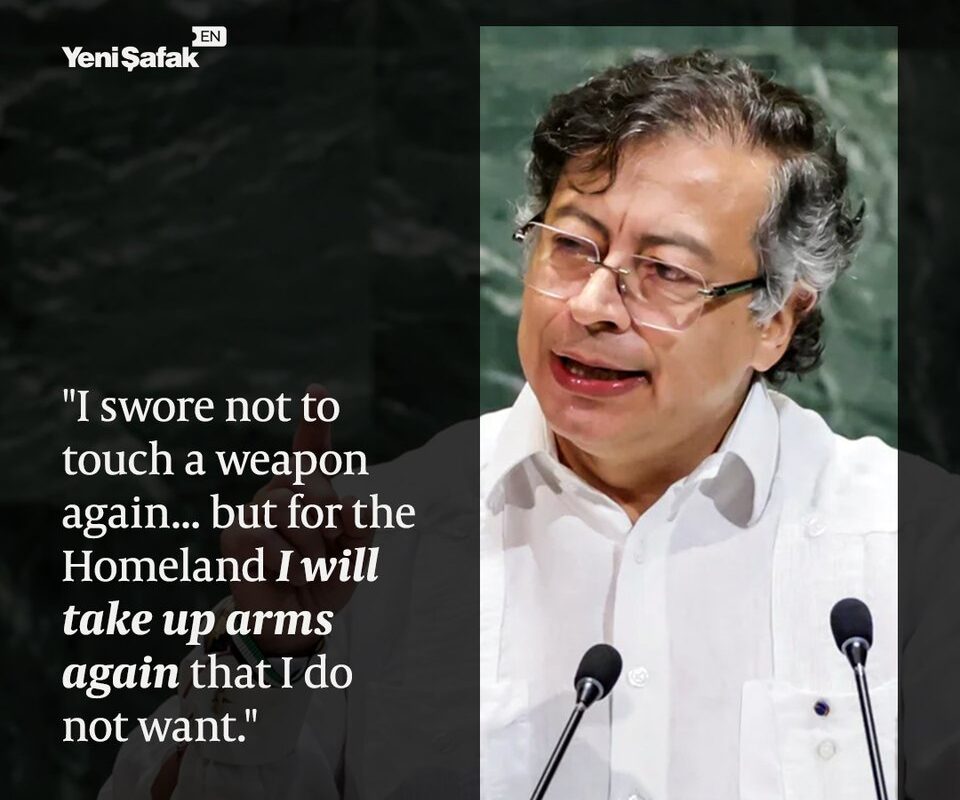
In remarks cited by local media, Petro recalled that he laid down his weapons decades ago but warned he was prepared to defend Colombia if it were attacked. He said he had “left arms back in the ’90s” but was willing to “pick them up again” to protect the country, language that underscores how seriously his government is treating the possibility of external military pressure.
🔴🔥 Petro vows to defend Colombia against Trump’s intervention threats
🇨🇴 Colombian President Gustavo Petro said he would reluctantly take up arms again if the United States attempted a military action against his country, in response to threats from U.S. President Donald… pic.twitter.com/5SiFzQbXpY
— Yeni Şafak English (@yenisafakEN) January 6, 2026
Colombia has also criticized developments in Venezuela, including what officials describe as anti-democratic actions by Maduro’s government, while insisting that any international response must respect sovereignty and avoid further destabilizing the region.
What It Means for You
For U.S. readers, this dispute goes beyond a war of words. Colombia is a key partner in efforts to curb cocaine production, manage regional migration and counter the influence of rival powers that have moved closer to Venezuela. A breakdown in trust between Washington and Bogota could affect cooperation on drug interdiction and border security, with possible ripple effects on U.S. communities.
The situation is also a reminder of how quickly regional crises can widen. Military action in one country, such as Venezuela, can raise fears in neighboring states and strain long-standing alliances. In the weeks ahead, watch for official statements from both governments, any changes in security or aid agreements, and signs of diplomatic outreach aimed at lowering the temperature before words harden into policy.
Sources: Official U.S. State Department designations of Colombia as a major non-NATO ally (2018); United Nations and partner agency data on Venezuelan displacement (latest consolidated figures through 2024); televised interview segments with correspondents in Bogota referenced in the original program transcript.
What do you think is the most responsible way for the United States to respond when tensions rise with a close democratic ally?