

TL;DR
President Donald Trump rejected U.S. responsibility after a Tomahawk-style cruise missile strike on an Iranian girls’ school killed at least 165 people, arguing the U.S.-made weapon is widely sold abroad and suggesting Iran itself has similar missiles, a claim not supported by available evidence.
Why This Matters
Questions over who bears responsibility for the deadly strike on an Iranian girls’ school go to the heart of how modern warfare is waged and explained. When a weapon believed to be a U.S.-designed Tomahawk missile kills civilians, blame can fall on the country that built it, the country that fired it, or both.
The United States is the world’s largest arms exporter, and American-made systems are in the arsenals of many allies. That complicates efforts to trace accountability when those weapons are used in conflicts far from U.S. shores. Trump’s comments highlight how quickly officials may distance themselves when U.S.-origin equipment is implicated in civilian deaths.
The episode also matters for already tense U.S.-Iran relations. Any perception that Washington is minimizing its role, or offering unsubstantiated claims about Iran’s capabilities, could fuel mistrust at a volatile moment. For readers, it underscores why transparency about arms sales, export controls, and battlefield investigations is central to understanding global news about war and civilian harm.
Key Facts & Quotes
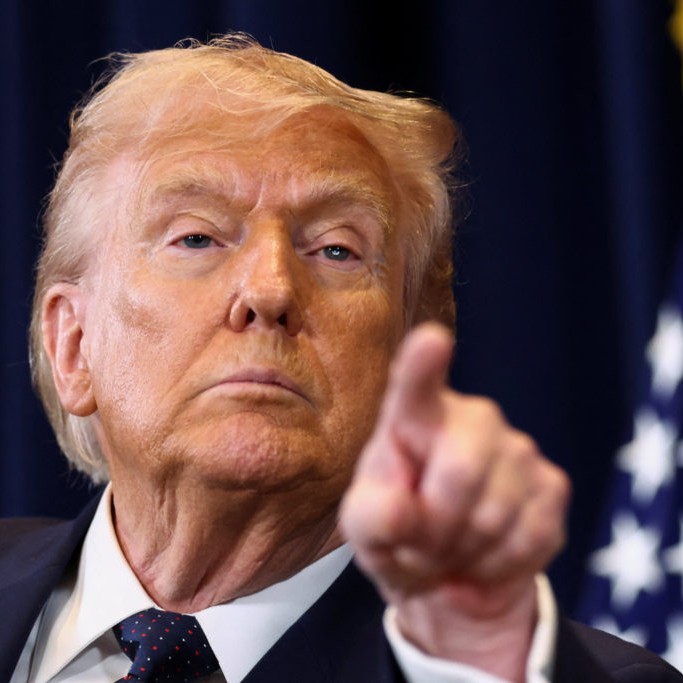
According to a March 9 report from a U.S. public broadcaster based on Associated Press reporting, a cruise missile believed to be a U.S.-designed Tomahawk struck a girls’ school in Iran, killing 165 people. Reporters asked President Trump on Monday whether the United States would accept responsibility, given that the missile is produced by American defense contractor Raytheon.
Trump argued that the Tomahawk is manufactured in the United States but exported widely, saying it is “sold and used by other countries” and insisting that Iran “also has some Tomahawks.” He added, “Whether it’s Iran or somebody else … a Tomahawk is very generic,” suggesting that simply identifying the model of missile was not enough to assign blame for the attack.
Trump Raises Possibility Iran Used Tomahawk in Deadly Strike on Iranian School
Trump says Iran could possess Tomahawk missiles used in a deadly strike on a girls’ school, while advisers privately urge a swift end to the war as early U.S. operations cost $5.6 billion in… pic.twitter.com/lQzv5kOIuo
— Kurdistan 24 English (@K24English) March 10, 2026
Defense export data and Raytheon’s own public materials show Tomahawk cruise missiles have been sold to allied nations such as Japan and Australia. However, the public broadcaster’s report noted there is no evidence Iran has obtained Tomahawk missiles. When pressed on why no one else in his administration was making the same claim, Trump said, “Because I just don’t know enough about it,” adding, “Whatever the report shows, I’m willing to live with that report.” Investigations into the strike and responsibility have not been fully detailed publicly.
What It Means for You
For Americans following the latest update on Iran and U.S. foreign policy, this incident illustrates how quickly narratives about responsibility can diverge from available facts. When top officials make claims that are not backed by public evidence, it can become harder for citizens to judge what really happened and who is accountable.
The story also highlights the long reach of U.S. arms sales. Weapons built in the United States can shape conflicts and civilian safety far away, even when American forces are not directly involved. In the coming weeks, watch for official findings on who carried out the strike, any congressional scrutiny of arms exports, and whether U.S.-Iran tensions rise further as each side reacts to the incident.
How should responsibility be shared when U.S.-made weapons are used in attacks that kill civilians abroad?
Sources: Public broadcasting report citing Associated Press, March 9, 2026; publicly available U.S. defense export data and Raytheon product information accessed prior to October 2024.