




TL;DR
Israeli authorities say a suspected Palestinian attacker killed two people and injured two others in a car-ramming and stabbing in northern Israel, triggering a planned military operation in the West Bank.
Why This Matters
The attack in northern Israel highlights how quickly violence in the region can flare beyond active battlefronts and into everyday civilian spaces such as roads and small towns. These kinds of car-ramming and knife attacks have periodically shaken Israelis over the past decade, adding to a sense of insecurity that persists far from formal conflict zones.
For policymakers and security services, the incident underscores the challenge of controlling movement between Israel and the occupied West Bank, where many Palestinians seek work, sometimes without permits. Israeli officials say the suspect entered Israeli territory days before the attack, raising questions about border monitoring and employer oversight.
The response is also significant. Israel’s defense minister ordered the military to act “forcefully and immediately” around the suspect’s hometown in the northern West Bank, signaling the likelihood of raids, checkpoints, and broader security operations. Such steps can heighten tensions with Palestinian communities and risk further clashes.
For international observers, the episode is another reminder that the Israeli-Palestinian conflict remains highly volatile, with local incidents quickly feeding into a wider cycle of retaliation, political pressure, and humanitarian concern.
Key Facts & Quotes
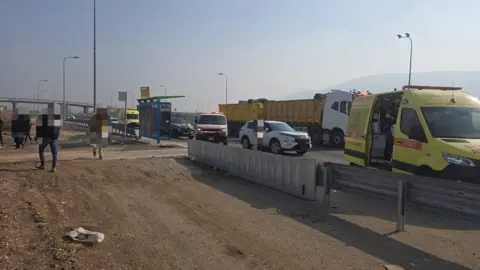
Police in northern Israel described the incident on 26 December as a “rolling terror attack,” saying a single suspect carried out multiple assaults in quick succession. According to Israeli police statements and emergency service reports, the attack began in the eastern city of Beit Shean, where a driver rammed into pedestrians.
Magen David Adom, Israel’s national emergency medical service, said a 68-year-old man was killed in the ramming and a 16-year-old boy was injured. The vehicle then continued west toward Ein Harod, about 8 miles (12.5 km) away, where the attacker allegedly got out and stabbed an 18-year-old woman, who later died of her wounds, according to the service.
A terror attack near Beit Shean in northern Israel, involved a vehicle-ramming and stabbing that killed at least two people, a 68-year-old man and a 19-year-old woman, before the terrorist was eliminated by security forces near Afula. pic.twitter.com/pIo7bYs189
— Open Source Intel (@Osint613) December 26, 2025
Police said the suspect drove on and was eventually shot and wounded by an armed civilian outside the nearby city of Afula. Israeli Defense Minister Israel Katz said the man was from Qabatiya, a town in the northern occupied West Bank, and ordered the Israel Defense Forces (IDF) to prepare an operation in the area. He said he had instructed the IDF to act “forcefully and immediately.”
The IDF stated that the suspect had “infiltrated into Israeli territory several days ago.” Israel’s public broadcaster Kan reported that the 37-year-old had been working illegally in Israel and used his employer’s vehicle in the attack. Authorities have not immediately announced any wider arrests or claims of responsibility by armed groups.
What It Means for You
For readers watching global news, this incident is a reminder that the Israeli-Palestinian conflict can affect daily life well beyond major cities or front lines. If you have family, business ties, or travel plans in Israel or the West Bank, you may see tighter security checks, temporary road closures, and an increased military presence, especially around northern areas and crossing points.
Politically, additional attacks or a strong military response in the West Bank could further complicate diplomatic efforts and deepen mistrust between communities. Observers will be watching whether this leads to a broader spike in lone-actor assaults or organized attacks, and how Israeli and Palestinian leaders respond.
As the situation evolves, updates from local authorities and official travel advisories will be key for anyone needing to move through the region or follow the latest developments.
Sources
Information in this article is based on official statements from Israeli police, the Israel Defense Forces, and Magen David Adom on 26 December 2025, as well as reports carried by Israel’s public broadcaster Kan the same day.
What do you think is the most effective way for authorities to improve everyday security while avoiding steps that further inflame tensions on both sides?