



TL;DR
The USS Abraham Lincoln carrier strike group has moved into the U.S. Central Command region covering the Middle East, including waters near Iran, as U.S. and Iranian officials issue stark new warnings.
Why This Matters
The deployment of a U.S. carrier strike group toward Iran is one of the clearest visible signs of rising military tension in the Middle East. U.S. Central Command oversees operations from the Persian Gulf to the Red Sea, a region that includes vital shipping lanes for global oil and gas supplies and close U.S. security partners such as Israel, Saudi Arabia and Gulf states.
The movement comes after weeks of protests inside Iran and harsh warnings exchanged between Washington and Tehran. When large warships and advanced aircraft gather in contested waters, the risk of miscalculation grows, even if neither side says it wants war. A single incident at sea, a missile test, or a clash involving regional militias could escalate quickly.
For Americans, this latest update is not only a foreign policy headline; it could affect energy prices, the safety of deployed service members, and the broader stability of an already volatile region.
Key Facts & Quotes
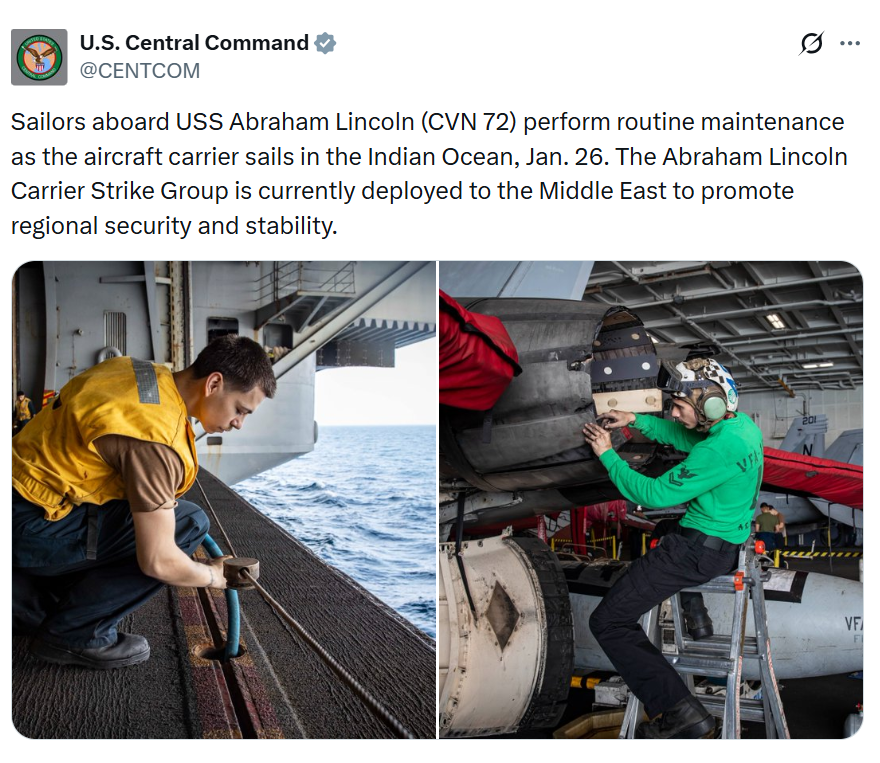
U.S. Central Command confirmed that the USS Abraham Lincoln aircraft carrier and its strike group have entered its area of responsibility, which covers the Middle East and includes Iran. In a public statement, the command said the deployment is intended “to promote regional security and stability.”
The USS Abraham Lincoln carrier strike group has arrived in the Middle East, the US military says, significantly increasing American firepower amid heightened tensions with Iran.
US Central Command said the deployment aims to promote regional security and stability.#Iran pic.twitter.com/O8LzN6hsma
— BPI News (@BPINewsOrg) January 26, 2026
According to U.S. defense officials, the group is operating in the Indian Ocean after being ordered to the region. As of Monday morning Eastern time, officials said the force had not yet arrived fully “on station,” meaning at its final operational position.
The strike group consists of the Lincoln and three guided-missile destroyers: the USS Frank E. Petersen Jr., the USS Spruance and the USS Michael Murphy. Embarked aircraft include F/A-18E/F Super Hornets, EA-18G Growlers, F-35C fighter jets and MH-60R/S helicopters.
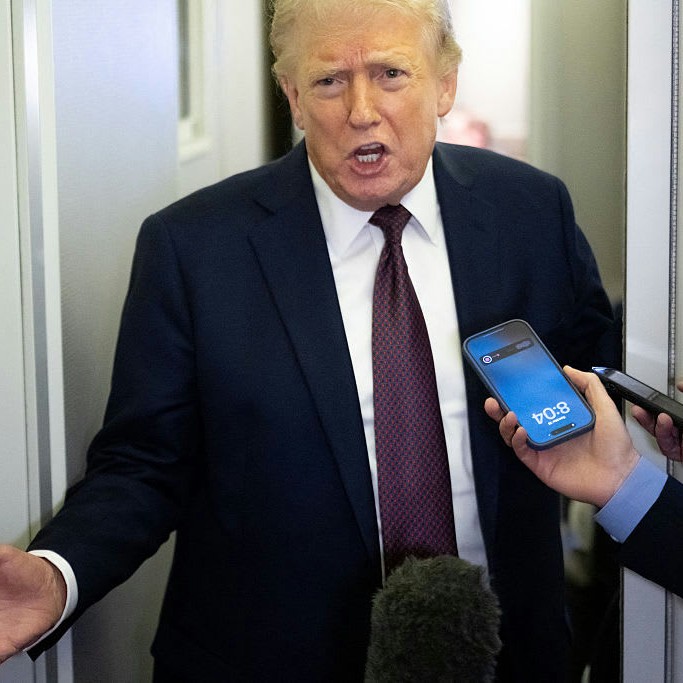
President Donald Trump said late last week that the United States had a “massive fleet” heading toward Iran, “just in case” he chose to take action, adding, “maybe we won’t have to use it.”
On the Iranian side, a senior commander of the Islamic Revolutionary Guard Corps, Gen. Mohammad Pakpour, was quoted by an outlet close to Iran’s Supreme National Security Council as warning the United States and Israel “to avoid any miscalculation.” “The Islamic Revolutionary Guards and dear Iran stand more ready than ever, finger on the trigger, to execute the orders and directives of the Commander-in-Chief,” he said.
Iran’s Defense Ministry spokesperson, Gen. Reza Talaei-Nik, also cautioned that any attack by Israel or the United States would “be met with a response that is more painful and more decisive than in the past.”
What It Means for You
For many Americans, this development will be watched through two lenses: concern for service members deployed far from home and anxiety about another potential Middle East crisis. A major confrontation with Iran could shake global markets, particularly energy prices, and complicate international travel and shipping through key waterways such as the Strait of Hormuz.
For now, U.S. officials describe the deployment as a deterrent, meant to signal readiness rather than an intent to launch attacks. Still, the sharper language on both sides suggests that headlines from this region could change quickly. It will be important to watch for additional official statements, any incidents at sea or in nearby countries, and signs of diplomatic contacts that might ease tensions.
Sources
- Official public statement by U.S. Central Command on social media, Jan. 26, 2026.
- Public remarks by President Donald Trump at the White House, Jan. 22, 2026.
- Statements carried by Iran-linked outlet Nournews on Telegram, Jan. 24-25, 2026.
- Comments from Gen. Reza Talaei-Nik distributed via Iran’s Defense Ministry channels, Jan. 26, 2026.
What do you think? How should the United States balance visible military deployments like this with efforts to avoid an unintended conflict in the Middle East?