


TL;DR
U.S. flag flies again at its Caracas embassy after seven years, signaling a cautious reset in relations following Nicolas Maduro’s January capture.
Why This Matters
Saturday’s flag-raising over the U.S. Embassy in Caracas is a visible turning point in one of Washington’s hardest relationships. The United States closed the compound in 2019 after disputing Nicolas Maduro’s re-election and withdrawing its diplomats. Restoring the flag signals that, despite his January capture, both governments see an advantage in reopening direct channels.
For Washington, a thaw with oil-rich Venezuela could reshape energy and sanctions policy. The country holds some of the world’s largest crude reserves, yet production has been choked by sanctions and years of crisis. Any sustained easing of tensions could eventually feed into global supply and, indirectly, the prices U.S. drivers face.
Inside Venezuela, the embassy’s return touches daily life more directly. It could pave the way for broader consular services, family visas, and educational exchanges that have long been on hold. But many politicians and citizens still criticize growing U.S. influence and the decision to remove Maduro by force, reminding both sides that reconciliation remains fragile.
Key Facts & Quotes
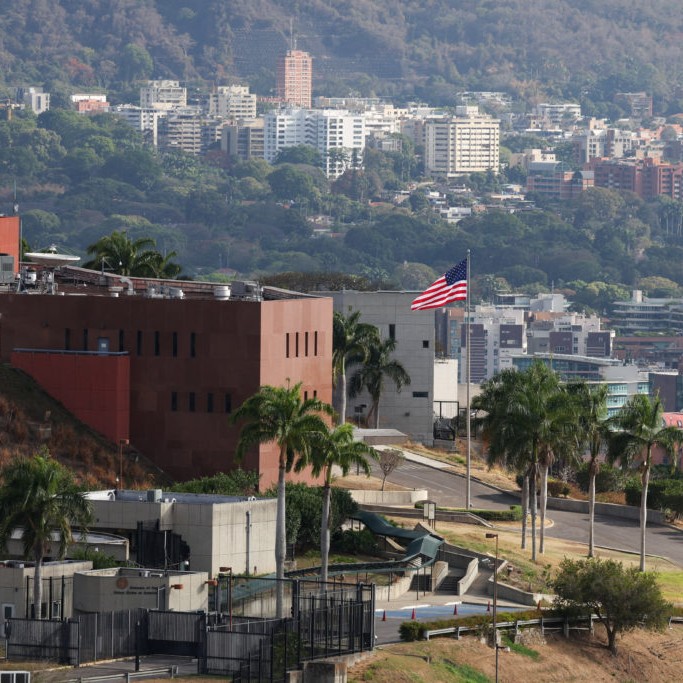
According to an Associated Press report, the American flag was raised Saturday over the hilltop embassy compound in eastern Caracas, the first time it has flown there since 2019. The building itself remains under renovation, and U.S. officials have not given a date for when full diplomatic and consular operations will resume.
In a statement posted on its social media accounts, the embassy team noted the flag went up “exactly seven years after it was taken down.” The move follows public backing from U.S. President Donald Trump for acting Venezuelan leader Delcy Rodriguez, who stepped in after Maduro’s capture and has kept negotiations with Washington open.
On March 14, 2019, the American flag was lowered for the last time at the U.S. Embassy in Caracas. This morning, March 14, 2026, at the same hour, my team and I raised it again, exactly seven years later.
A new era in U.S.–Venezuela relations begins.
We stand with Venezuela. pic.twitter.com/vEqwap8lrA— Lt. Gen. (Ret.) Andrea L. Thompson 🇺🇸 (@andrealthompsom) March 15, 2026
Local reaction in Caracas was mixed but often hopeful. “It’s a good thing, really, what a joy,” resident Luz Veronica Lopez said, adding that renewed ties with many countries are needed “to move forward with good relations with the rest of the world.” Another resident, Alessandro Di Benedetto, called the ceremony “positive… another step,” even as many Venezuelans remain sharply critical of Trump’s actions and U.S. involvement in the oil sector.
What It Means for You
For Americans, the latest update in U.S.-Venezuela relations may show up first in headlines about oil, migration, and foreign policy rather than in daily routines. Over time, a more stable relationship could influence energy markets, regional cooperation on border management, and the scale of humanitarian assistance flowing to Venezuelan communities.
For Venezuelan Americans and those with family still in the country, a reopened embassy could eventually mean clearer legal paperwork, easier travel, and a physical place to seek help if relatives run into trouble. The pace will depend on how quickly the renovations finish, the level of diplomatic staff approved, and whether political tensions remain contained.
How do you think the renewed U.S.-Venezuela relationship should balance energy needs, democratic ideals, and respect for each country’s sovereignty?
Sources:
- Associated Press reporting from Caracas.
- Public statements by the U.S. Embassy in Venezuela.
- U.S. State Department historical summaries on Venezuela (accessed March 14, 2026).