



Why This Matters
Two Democratic members of Congress are calling for a major rethink of U.S. policy toward Cuba after a five-day visit to the island, arguing that American energy sanctions amount to an “economic bombing” that is worsening an already severe humanitarian crisis.
The trip comes as Cuba faces rolling blackouts, fuel shortages, and disruptions to basic services. With Washington and Havana both acknowledging quiet high-level talks, the lawmakers’ criticism adds new pressure on U.S. policymakers to reconsider the decades-old approach to the island.
Any shift in sanctions or energy policy toward Cuba could affect regional stability, migration flows, and U.S. relations across Latin America, while also shaping political debate at home ahead of future elections.
Key Facts and Quotes
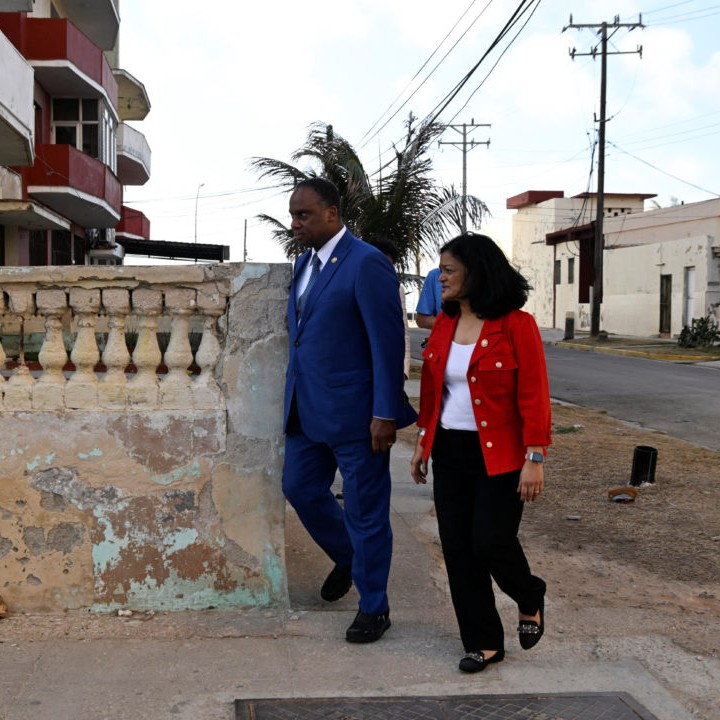
Reps. Pramila Jayapal of Washington and Jonathan Jackson of Illinois, both Democrats, visited Havana on an official delegation that ended Sunday. They met Cuban President Miguel Diaz-Canel, Foreign Minister Bruno Rodriguez, and members of Parliament to discuss the island’s deepening energy and economic problems.
Diaz-Canel wrote on X that he “denounced the criminal damage caused by the #blockade, particularly the consequences of the energy embargo imposed by the current U.S. administration and its threats of even more aggressive actions.” He added that Cuba remains willing to engage in “serious and responsible bilateral dialogue” to address differences. Both governments have recently acknowledged ongoing high-level talks but have not shared details.
Jayapal told reporters that recent steps by Havana-including limited openings for investment by Cuban Americans, a plan to pardon more than 2,000 prisoners, and cooperation with an FBI team probing a fatal shooting involving a U.S.-flagged boat-suggest “the moment is here for us to have a real negotiation between the two countries and to reverse the failed U.S. policy of decades, a Cold War remnant that no longer serves the American people or the Cuban people.” Cuban authorities say those pardoned were accused of a range of crimes and do not appear to include political prisoners.
The trip unfolded against the backdrop of tightened U.S. energy pressure. In late January, President Donald Trump threatened tariffs on any country selling or supplying oil to Cuba, though a Russian tanker was allowed to deliver 730,000 barrels of crude last week, the first such shipment in three months to a country that produces only about 40 percent of its own oil needs. According to visiting lawmakers, U.S. actions in Venezuela earlier this year helped halt critical fuel shipments from Venezuela. In a joint statement, they called current measures “cruel collective punishment, effectively an economic bombing of the infrastructure of the country – that has produced permanent damage. It must stop immediately.”
Cubans, already weakened by five years of economic crisis, have felt the fuel crunch through nationwide power cuts, gasoline rationing, reduced public transport, shortened work hours, and disrupted hospital operations and flights. Russia has pledged a second fuel delivery, but it is unclear when it will arrive; experts estimate the first cargo could yield about 180,000 barrels of diesel, enough for roughly nine to ten days of domestic demand. Jayapal said such lifelines are temporary, arguing, “We need a longer, permanent solution for the Cuban people and the American people.” Jackson compared the situation to efforts to keep the Strait of Hormuz open, saying Cuba “is the most sanctioned part of Earth” and urging a “free flow of oil, fuel, and energy in our own hemisphere.” The two lawmakers said they will prepare a formal report and back House initiatives to ease sanctions in response to what they describe as a humanitarian emergency.
What It Means for You
For U.S. readers, the visit underscores that Cuba policy is not settled, even after decades of embargo. If the lawmakers’ push gains traction, changes to sanctions could eventually affect family remittances, travel rules, and broader U.S. engagement with the island.
In the near term, observers will be watching for signs of progress in U.S.-Cuba talks, additional fuel deliveries to Cuba, and concrete steps by Havana on economic and political reforms. Together, those moves will shape whether more members of Congress support easing restrictions or argue for keeping, or even tightening, the current approach.
How do you think U.S. policy toward Cuba should balance strategic concerns with the humanitarian impact on ordinary Cubans?
Sources
Sources: Reporting by Cristiana Mesquita for the Associated Press, published April 6, 2026; Public statements by Cuban President Miguel Diaz-Canel on X dated April 6, 2026; Joint public statement by U.S. Reps. Pramila Jayapal and Jonathan Jackson released April 5, 2026.